Isolated by Geography, Bound by Debt
Mining settlements represent the most utilitarian and often most oppressive form of the single-industry town. Because valuable mineral deposits are rarely found near existing population centers, extraction companies were forced to build settlements from scratch in mountains, deserts, and frozen tundras.
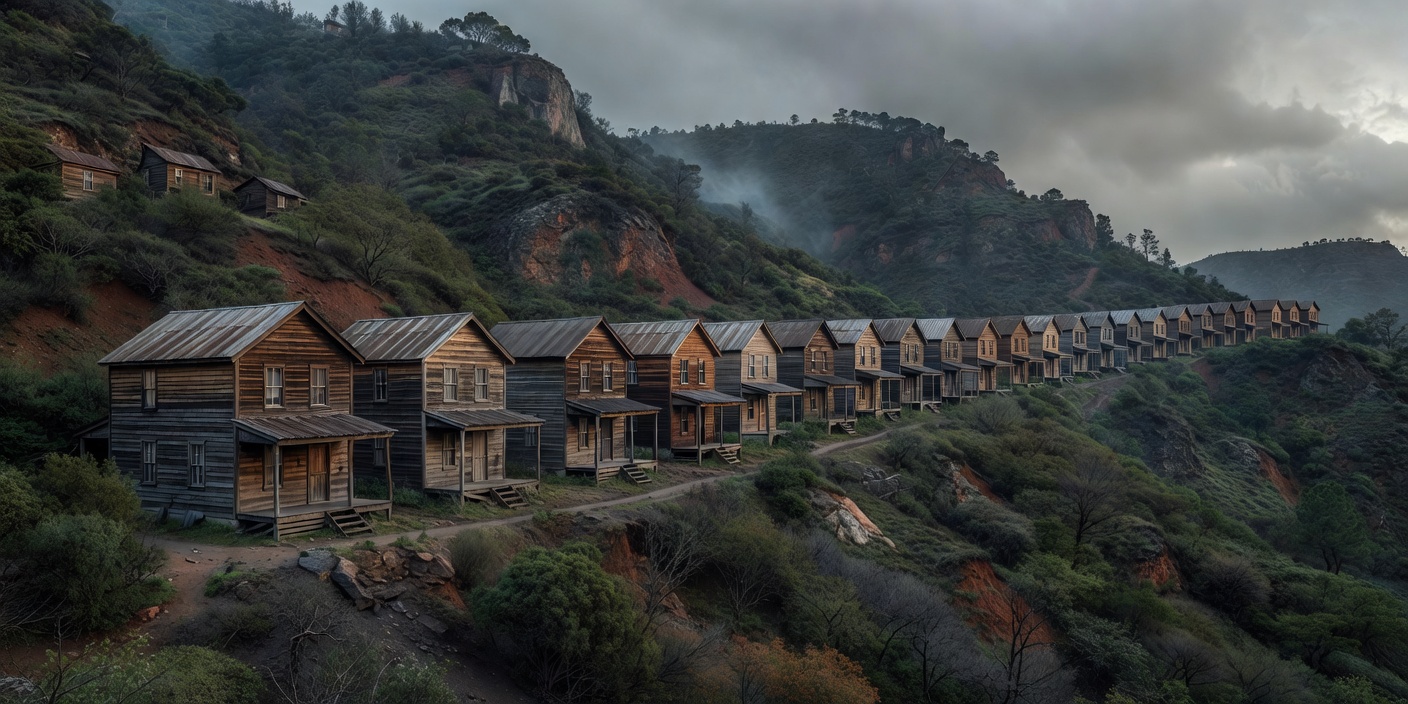
These towns were usually constructed hastily. Standardized blueprints generated identical wooden structures known as "shotgun houses." The focal point of the town was never a civic square, but the mine entrance itself, a constant reminder of the town's singular purpose.
The Scrip System
A defining feature of the historic mining town was the economic monopoly held by the employer. In many Appalachian coal towns in the late 19th and early 20th centuries, miners were not paid in federal currency, but in company scrip.
Scrip was a substitute currency—often metal tokens or paper coupons—that was valid only at the company-owned store. Because the company set the prices, goods were often significantly marked up. This system effectively trapped workers in a cycle of debt; they owed more to the company store for rent, tools, and food than they earned in wages.
- Notable Example: The town of Matewan, West Virginia, became infamous for conflicts stemming from the oppressive conditions enforced by the Stone Mountain Coal Company.
- The Company Store: The sole source of provisions, clothing, and mining gear for families living in the camp.