The Paternalistic Vision
Unlike the harsh, utilitarian extraction camps, many 19th-century textile towns were built with a distinct architectural and social philosophy known as industrial paternalism. Mill owners, particularly in New England (USA) and Northern England, sought to avoid the squalor and unrest of early industrial centers like Manchester.
They envisioned communities where the company provided not just wages, but a structured, moral environment. This meant building sturdy brick boarding houses, libraries, churches, and lecture halls alongside the massive weaving factories.
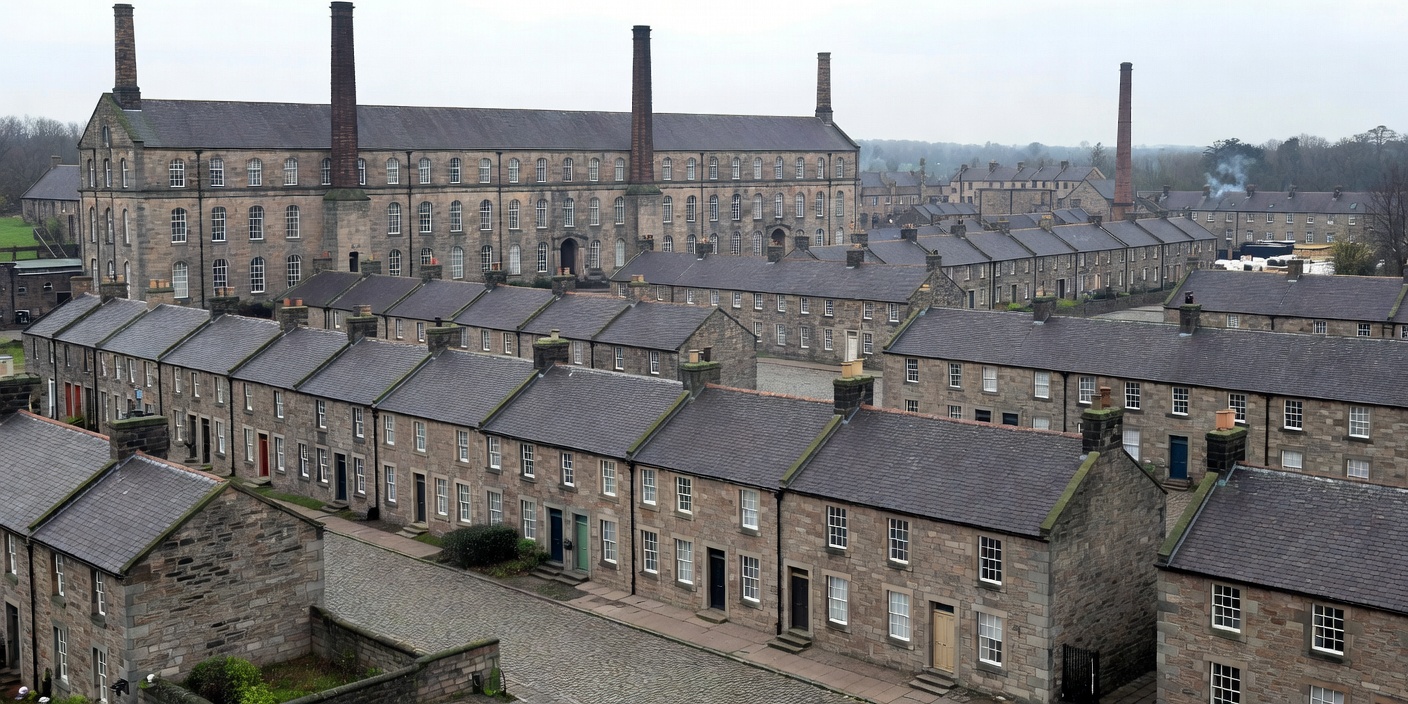
Saltaire: A Utopian Experiment
Built in 1851 by Sir Titus Salt in Yorkshire, England, Saltaire is a prime example of this utopian vision. Sir Titus moved his business out of the polluted center of Bradford to a greenfield site. He built neat stone houses for his workers, complete with wash-houses and a hospital. Crucially, to maintain moral order, he banned public houses (pubs) from the village entirely.